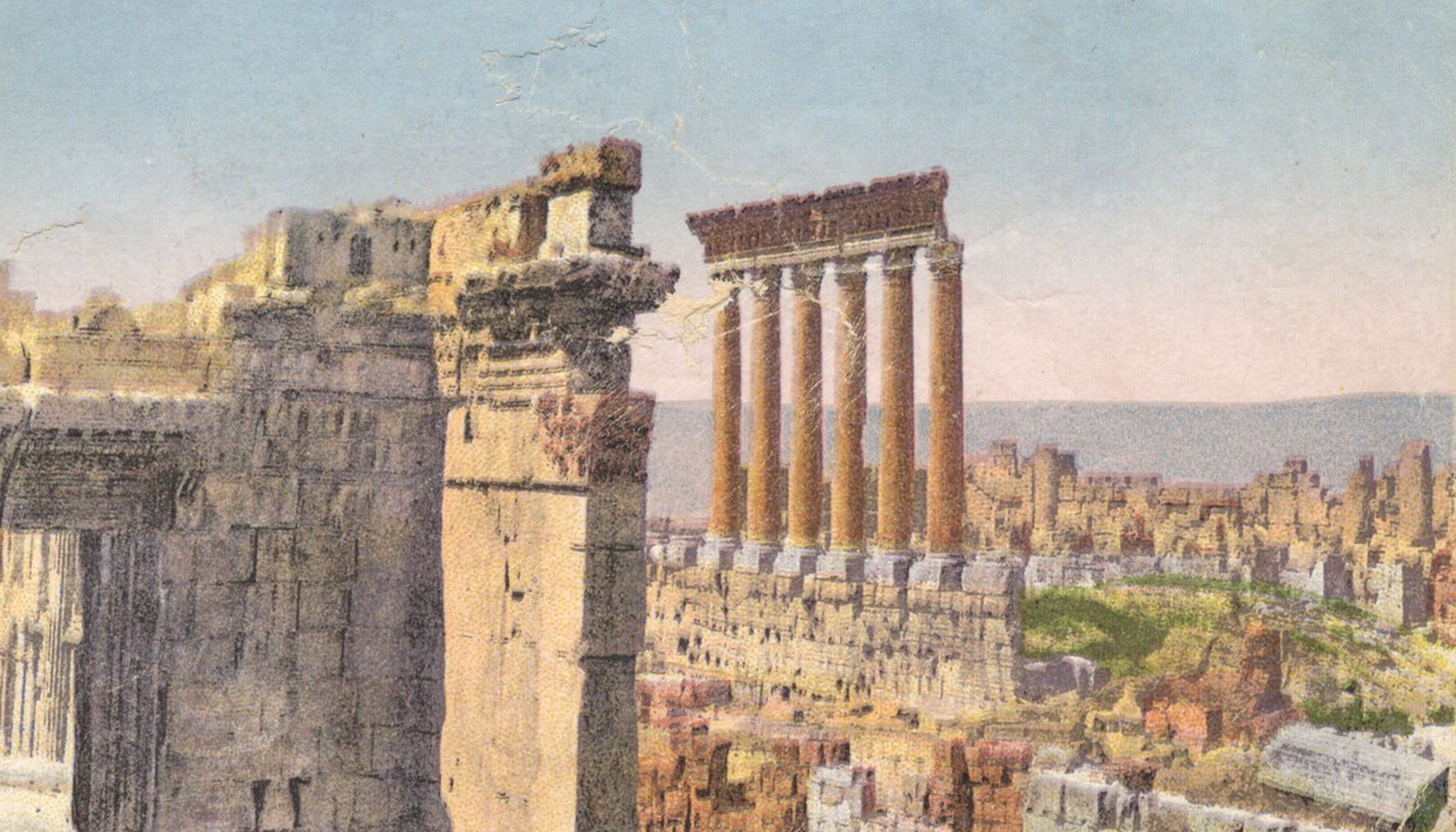
Editorial scaffold for Lebanon. Replace with licensed photography, maps, archival imagery, or illustration before launch.
Countries & Regional History | Country
Lebanon
It is October 17, 2019, and the Lebanese government has just proposed a tax on WhatsApp calls. Within hours, hundreds of thousands of people flood the streets of Beirut, Tripoli, Sidon, and Tyre. The crowd is not organized by any party. Sunni and Shia protesters stand beside Christians and Druze. They chant a single phrase: *kullun ya'ni kullun* — "all of them means all of them."
They mean every politician. Every sect leader. Every warlord who became a statesman. Every banker who got rich while the country borrowed itself into ruin.
This is not a revolution against a dictator. There is no dictator. Lebanon has a president, a prime minister, a parliament — 18 officially recognized religious communities each guaranteed a slice of government power. It has had this system since 1943. The protesters are not angry at the absence of politics. They are angry at the politics itself. The system designed to protect everyone has delivered for almost no one.
MASTER TIMELINE
100%
Scroll or drag to explore · Use slider or +/− to zoom · Click any event
WHO, WHAT, AND WHY IT MATTERS
Lebanon is a small country — roughly the size of Connecticut — on the eastern shore of the Mediterranean. It sits at the intersection of the Arab world, the Middle East conflict over Palestine, the rivalry between Iran and its neighbors, and the long competition between Western powers and local forces over who controls the Levant.
The country's defining feature is confessionalism: a system in which government posts are allocated by religious sect. The president must be a Maronite Christian. The prime minister must be a Sunni Muslim. The speaker of parliament must be a Shia Muslim. Cabinet seats, army commands, and government jobs flow through the same formula — all based on a census taken in 1932 by the French, when Christians were a slim majority.
That census has never been updated. Lebanon has never held another one. For over 90 years, a country with a rapidly changing population has governed itself according to numbers that no longer match reality. This is not a technicality. It is the fault line that runs beneath every crisis in modern Lebanese history.
Understanding Lebanon is essential for understanding the modern Middle East: the Palestinian refugee crisis, the rise of non-state armed groups, what happens when a state borrows and borrows until it collapses, and what it costs ordinary people when their government is captured by sectarian leaders who profit from keeping it broken.
THE MOST IMPORTANT THING
The frame before the details
Lebanon's confessional system was designed to prevent any one community from dominating the others. Guaranteed shares, in theory, meant guaranteed peace. In practice, the system froze sectarian identity into the architecture of the state. It made every political question a communal one. It gave sect leaders an incentive to keep followers loyal rather than empowered. And it made reform structurally nearly impossible — because every reform threatened someone's guaranteed share. The system did not prevent conflict. It institutionalized the conditions for it.
Some scholars of democracy have argued that power-sharing systems like Lebanon's are a rational way to manage deeply divided societies. Others — including historians who lived through the Lebanese experience — argue that Lebanon's version never produced genuine sharing and instead calcified inequality while preventing democratic accountability. Both arguments have serious evidence behind them. What is not disputed is the outcome.
THE DARK SIDE
The "Paris of the Middle East" narrative is real but narrow. The luxury hotels, the cosmopolitan press, the open banking system — these belonged to a thin layer of Beirut's elite. Historians estimate that in 1960, three families controlled roughly a quarter of Lebanon's national income. The predominantly Shia south and Bekaa Valley received minimal state services for decades. Palestinian refugees lived in deteriorating camps without civil rights, excluded from most professions and barred from owning property — not because Lebanon lacked the capacity to do better, but because granting refugees rights would upset the sectarian arithmetic that kept political leaders in power.
The Taif Agreement, celebrated as the peace deal that ended the Civil War, quietly handed Syria the keys to Lebanese politics for 15 more years. Syrian intelligence services monitored and shaped Lebanese politics at every level — approving or blocking candidates for major offices, protecting Syrian commercial interests, and silencing critics. Several Lebanese figures who challenged this arrangement were killed. The Cedar Revolution of 2005 ended the Syrian military presence, but it left the sectarian patronage system fully intact.
The economic collapse of 2019–2020 was not a natural disaster. It was the endpoint of a deliberate model: banks paid high interest rates to attract diaspora dollars, lent that money to the state at a profit, and maintained an overvalued exchange rate that made the elite's dollar savings feel secure. The people who designed and ran this model largely protected their own assets before the freeze hit ordinary depositors. Lebanese savers collectively lost an estimated $80–$90 billion. As of 2026, no senior official has been prosecuted for the collapse or for the six years of documented warnings about the ammonium nitrate sitting in the port.
WHY IT MATTERS TODAY
The modern echo
Lebanon is not a cautionary tale safely in the past. As of 2026, the country remains in acute economic crisis. No IMF rescue package has been implemented. The banks remain effectively insolvent. An estimated 1.5 million Syrian refugees — roughly 25 percent of the population — live primarily in already-poor areas of the north and Bekaa Valley, placing pressure on a state that cannot reliably deliver electricity, clean water, or healthcare to its own citizens.
The 2024 conflict significantly weakened Hezbollah. Hassan Nasrallah and his designated successor were killed in Israeli airstrikes. Much of Hezbollah's command structure and weapons stockpiles were degraded. A new president was elected in January 2025, ending a two-year vacancy. A reform-aligned prime minister took office with US and Saudi support — the most significant shift in Lebanese political alignment since 2005. Whether this moment produces structural change or becomes another false start is uncertain. Whether the assessment is "likely" or "possible" depends on which analyst you ask, and both answers are honest.
The broader stakes reach past Lebanon's borders. When a state is captured by a class of leaders whose power depends on keeping the system broken, the state cannot fix itself from within. External pressure helps only if there is something inside to push against. In Lebanon in 2026, it is not yet clear whether that something exists.
3 SURPRISING FACTS
Fast facts worth sharing
- **1. Lebanon has not held a census since 1932.** The confessional power-sharing formula is based on French colonial population counts taken over 90 years ago. Every politician in Lebanon knows these figures no longer reflect reality. No political faction has agreed to count again — because any new census would force a renegotiation of who gets what, and every faction fears losing its guaranteed share.
- **2. The Beirut Port explosion was the fourth-largest non-nuclear explosion in recorded history.** The detonation of 2,750 tonnes of ammonium nitrate — sitting in a port warehouse for six years, known to dozens of officials who did nothing — released energy estimated at roughly 0.5 to 1.1 kilotons of TNT equivalent. The shockwave was recorded in Cyprus and felt in Turkey and Greece. Beirut's port, through which roughly 60 percent of the country's food imports passed, was largely destroyed. As of 2026, no senior official has been prosecuted.
- **3. Lebanon hosts more refugees per capita than any other country in the world.** At peak displacement from the Syrian civil war, approximately 1.5 million Syrian refugees lived in Lebanon — alongside hundreds of thousands of Palestinian refugees — in a country of roughly 5–6 million people. That ratio is the equivalent of the United States absorbing roughly 80 million refugees at once, in a country already running out of electricity and clean water.
DEEP DIVE
Unlock the full six-day course
This Snapshot covers the arc of Lebanon's rise and collapse. But it only scratches the surface of what makes this country one of the most instructive case studies in the modern world.
In the Deep Dive, you will explore how a Phoenician identity myth shaped a civil war, what was really agreed in the room where the National Pact was written, how Hezbollah built a parallel state more capable than the official one, and why the Beirut Port explosion — a story of documents ignored for six years — tells you everything about how Lebanon's political system actually works. You will also follow the live question of 2026: whether Lebanon's new leadership can break the pattern that has defined every government since 1943.
**Explore the full story in the Lebanon Deep Dive.**
RELATED COURSES