BASHAR AL-ASSAD - DAY 1 OF 6 · ~13 MIN
Dynastic Succession
It is a January morning in London. Bashar al-Assad is in his flat in Marylebone, an unremarkable rented apartment near the Western Eye Hospital where he is completing his ophthalmology residency. He has been in London since 1992. He is a quiet man. Colleagues at the hospital describe him as studious and shy, more comfortable discussing retinal surgery than politics. He has a long commute and an early shift. He is not a ruler's son in the way the world imagines such things. He is a second son, which in the logic of the Assad family means he is a doctor.

Contents — 7 sections
OPENING SCENE

It is a January morning in London. Bashar al-Assad is in his flat in Marylebone, an unremarkable rented apartment near the Western Eye Hospital where he is completing his ophthalmology residency. He has been in London since 1992. He is a quiet man. Colleagues at the hospital describe him as studious and shy, more comfortable discussing retinal surgery than politics. He has a long commute and an early shift. He is not a ruler's son in the way the world imagines such things. He is a second son, which in the logic of the Assad family means he is a doctor.
The phone call comes in the pre-dawn hours. His brother Basel, the heir apparent, the athletic golden son whose portrait hangs beside his father's on billboards across Damascus, has been killed. Basel al-Assad was driving at speed through dense fog on the Damascus-airport highway when his Mercedes struck another vehicle; he died at the scene, at the age of 31. The plan dies with him.
Within hours, Bashar knows what the phone call means. He does not need anyone to explain it. There is one other son positioned for power — Maher, the youngest, known for a violent and unstable temperament — and there is himself. The choice, if it can be called that, is made before he boards the plane. Within 24 hours of the crash, Bashar al-Assad is on a flight to Damascus. He will never return to his medical career. He will never complete his residency. He is going home to learn how to govern a country he had been quietly allowed to ignore.
DID YOU KNOW?
**Bashar al-Assad briefly held the title of president of the Syrian Computer Society before he became president of Syria.** He was appointed to lead the Computer Society in 1994, shortly after returning from London, and the position was widely understood as a comfortable preliminary role that gave him a public profile without threatening established power centers. The Society promoted internet connectivity in Syria at a time when internet access was heavily restricted and monitored. The detail captures something essential about the transition period: Hafez was threading a needle between giving his son visibility and not giving him enough independence to develop a rival power base.
THE SYSTEM HE INHERITED

To understand what Bashar inherited, you must understand what his father built. Hafez al-Assad was born on October 6, 1930, in Qardaha, a small and poor Alawite village in the mountains above Latakia on Syria's Mediterranean coast. Alawites are a heterodox sect derived from Shia Islam, making up roughly 12 percent of Syria's population. Under both Ottoman and French Mandate rule, Alawites were among the most economically and socially marginalized communities in the country — they farmed the hillsides while Sunni urban elites ran the cities and professions.
The military changed everything. The Syrian Arab Army and, crucially, the Syrian Air Force recruited heavily from rural and minority communities in the 1940s and 1950s, in part because the Sunni urban middle class had enough alternatives to avoid military service. Hafez joined the Baath Party as a student in 1946, enrolled in the Air Force, and became a pilot. He was competent, deliberate, and patient in a way that distinguished him from the erratic revolutionary figures around him. When the Baath Party seized power in a 1963 coup, Hafez was inside the machine.
The climb was methodical. He became air force commander. He built alliances inside the officer corps with fellow Alawites and tribal networks from the Latakia region. On November 13, 1970, Hafez al-Assad staged what became known as the "Corrective Movement" — a bloodless internal coup that removed the civilian Baathist leadership and placed military officers firmly in control. He was 40 years old and would not relinquish power until the day he died.
THE ARCHITECTURE OF CONTROL
What Hafez built over the following three decades is what scholars of authoritarian politics call the "Assad system." It was not simply a dictatorship held together by one man's personality. It was an interlocking apparatus designed to make removal impossible from any direction. At its center were at least four main intelligence agencies, each reporting directly to Hafez and each tasked with monitoring the others. General Intelligence, Military Intelligence, Political Security, and Air Force Intelligence operated in parallel, surveilled each other's personnel, and competed for the president's favor.
The deliberate redundancy meant that no single security chief could accumulate enough power to threaten the presidency — if one director tried to move against Hafez, the others would be watching, and Hafez would know before the plot materialized. The system was expensive and inefficient in purely organizational terms, but efficiency was never the point. Loyalty and mutual vulnerability were the point. A state held together by four overlapping security services that all distrust each other is remarkably difficult to overthrow from within.
The military's command positions were staffed heavily with Alawites. This was not incidental. The logic was that Alawite officers had a personal stake in regime survival that went beyond ideology: if the regime fell, the sectarian backlash against the Alawite community could be severe. They were not loyal to Hafez because of ideology; many were loyal because they understood that their own survival was inseparable from his. The Baath Party served a different function, as a mobilization structure rather than an ideological vehicle. Membership was a prerequisite for government employment, military promotion, and commercial licensing. By the 1980s, Baath Party membership reached into the millions — not because millions of Syrians believed in Baathism, but because membership was the price of a normal livelihood.
THE HAMA LESSON

The test of the system came in February 1982. The Muslim Brotherhood had been staging an armed uprising in Hama, Syria's fourth-largest city, for months. Their grievances included economic marginalization, the suppression of Islamic expression, and the domination of state institutions by Alawites whom many Sunni Syrians viewed as outside the mainstream of Islam. In early February, Brotherhood fighters launched an open armed revolt in Hama, seizing parts of the old city.
Hafez's response was total. He dispatched his brother Rifaat al-Assad, who commanded the Defense Companies, a praetorian force separate from the regular army with up to 55,000 troops and heavy armor. The 3rd Armored Division was also deployed. Estimates of the number of civilians killed in the weeks-long assault on Hama range from ten thousand to forty thousand; the Syrian government never published official figures, and the true number remains disputed. Much of the medieval old city was demolished to allow tanks to maneuver through streets designed for foot traffic. When it was over, Hama looked like a city that had been partly erased.
The Hama Massacre — as it came to be called — established a principle that governed Syrian political life for nearly three decades afterward. Armed opposition to the regime would be met with force calibrated not merely to defeat the opposition but to make future opposition unthinkable. It was not a disproportionate response in the sense of an overreaction; it was a deliberate statement of policy. After Hama, organized political opposition inside Syria was effectively absent for roughly 30 years. The lesson was understood.
Rifaat al-Assad, the man who carried out the Hama operation, represented a permanent internal threat to his brother. In 1984, while Hafez was briefly incapacitated by illness, Rifaat moved Defense Companies units toward Damascus, apparently positioning for a power grab. Hafez recovered, confronted his brother, and eventually forced him into exile in 1984, though Rifaat retained Syrian citizenship and occasionally returned. The episode illustrated something important: even within the inner family circle, Hafez trusted the architecture of competing loyalties more than he trusted individuals.
THE CHOSEN SON

Hafez had three sons. Maher, born in 1967, was the youngest and already marked by a reputation for violence and unpredictability that made him unsuitable for the presidency in Hafez's calculation. Bashar, born on September 11, 1965, was quiet and academic, and no one considered him for the succession. Basel, born in 1962, was the answer.
Basel al-Assad was everything Hafez wanted in a successor. He was athletic and physically imposing, an accomplished equestrian and marathoner who competed nationally. He trained with military intelligence, cultivated relationships across the officer corps, and carried himself with the kind of confident authority that Hafez valued. His image was placed beside his father's on public billboards across Syria in the early 1990s. By the time he died, Basel had already been given command responsibilities in the Presidential Guard and was widely acknowledged inside Syrian power circles as the designated heir. The succession was not a secret. It was announced in stone and poster paper across every Syrian city.
The plan assumed decades. Basel was 31 when he died. He would have had 20 more years to consolidate his position, purge his rivals, and learn the machinery before his father's death. Everything Hafez had built was calibrated to pass smoothly to the son who had been prepared for it. When that son drove into a foggy highway embankment at high speed on a January morning, the entire architecture of succession was left without its subject.
"The constitution was amended within hours of Hafez's death to lower the minimum presidential age from 40 to 34. Bashar's exact age. Then a referendum was held. He received 97.29 percent of the vote. There was one candidate."
THE SECOND SON
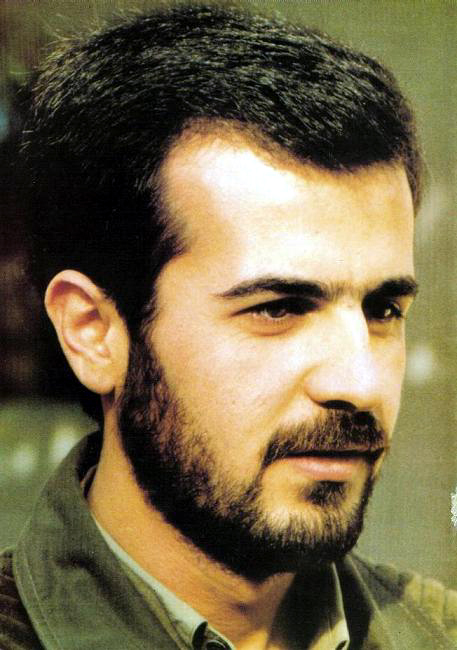
Bashar's life before the phone call was the life of a professional, not a politician. He graduated from Damascus University's medical school, completed his initial training, and arrived at the Western Eye Hospital in Marylebone, London in 1992 to specialize in ophthalmology. The hospital, on the Marylebone Road near Regent's Park, was a respected institution in its specialty. Bashar's colleagues would later describe him as genuinely engaged with the work, not someone killing time waiting for a different destiny.
In London he had a life outside the regime entirely. He attended Syrian expatriate social gatherings where he met Asma Akhras, a British-Syrian woman born in 1975 who had grown up in London, the daughter of a Harley Street cardiologist. She had studied computer science at King's College London and was working in investment banking. They began a relationship that would eventually lead to their marriage in December 2000. The fact that he was dating the daughter of a doctor and living an ordinary London expatriate life underscores the distance between Bashar and the machinery of power his father was running in Damascus.
The recall was total and immediate. Within 24 hours of Basel's death, Bashar was on a plane home. The ophthalmology residency was abandoned mid-course. He never returned to clinical medicine. From the moment he landed in Damascus, he was enrolled in a different kind of education, one that would consume the next six years of his life.
CRASH COURSE IN POWER
The grooming program was accelerated and visible. Bashar enrolled at Homs Military Academy, Syria's main officer training institution, and passed through the course at a pace that normally required years, completing it in months. Rank followed quickly: within a few years he was a colonel, a grade that most Syrian officers spend decades reaching. The promotions were not based on accumulated service or demonstrated battlefield competence; they were statements of political intent, signals to the officer corps that this was the man they were to treat as their future commander. The officers understood the signal. They adjusted accordingly.
By 1998, Hafez gave Bashar a substantive portfolio: Syrian affairs in Lebanon. Syria had deployed up to 40,000 troops in Lebanon since 1976, when it had intervened in the Lebanese Civil War. Lebanon had become a revenue source, a strategic buffer, and a laboratory for Syrian intelligence operations. Running Syrian patronage networks in Beirut, managing relationships with Hezbollah and the Amal movement, and negotiating the endless factional politics of Lebanese post-war reconstruction required exactly the combination of intelligence manipulation and political negotiation that Hafez wanted his son to master.
In 1999, Bashar led an anti-corruption campaign inside Syria that removed several prominent figures from their positions. The campaign served multiple functions simultaneously. It demonstrated to the security establishment that Bashar could use the machinery of the state against internal targets. It removed rivals and potential challengers under cover of administrative housekeeping. And it allowed Bashar to project an image of reformism, an image that would prove useful in his early years as president. The anti-corruption campaign was understood by political analysts as a purge conducted in the language of governance reform — a technique his father had refined over decades.
THE DEATH AND THE SUCCESSION
On June 10, 2000, Hafez al-Assad died of a heart attack at his Damascus home at the age of 69. He had governed Syria for approximately 30 years. Reports at the time indicated he had been speaking by telephone with Lebanese Prime Minister Rafik Hariri shortly before his death, discussing Lebanese parliamentary affairs, a reminder that his attention remained focused on Lebanese politics until the final hours of his life.
The succession machinery activated within minutes. An emergency session of the Baath Party Regional Command elected Bashar secretary-general within hours of his father's death — before any public announcement, before any formal mourning period, before any competing name could be raised. The speed was a feature, not a coincidence; the entire apparatus had been calibrated to execute the transition before opposition could organize. The party that had nominally been a vehicle for pan-Arab socialist ideology now functioned as a mechanism for dynastic transfer.
The constitutional obstacle required a parliamentary solution. Article 83 of the Syrian constitution required that presidential candidates be at least 40 years old. Bashar was 34. The Syrian People's Assembly convened in emergency session and amended the article, lowering the minimum age from 40 to 34 — Bashar's exact age. The amendment passed in minutes. On July 10, 2000, Syrian voters went to the polls for a referendum in which Bashar al-Assad was the sole candidate. Official results reported 97.29 percent approval, with reported turnout of 94.6 percent. On July 17, 2000, Bashar al-Assad was inaugurated before the Syrian People's Assembly, simultaneously sworn in as president, commander-in-chief of the armed forces, and Baath Party secretary-general.
THE REPUBLIC THAT FUNCTIONED LIKE A MONARCHY

The inaugural speech on July 17, 2000 offered language that struck observers as genuinely reformist. Bashar spoke of "selective democracy," constructive criticism, administrative modernization, and investment in internet infrastructure. Commentators in the region and in Western capitals noticed. Here was a young, London-educated man who had spent time in a genuine democracy, who spoke of reform without apparent embarrassment, and who seemed to represent a break from the rigid security-first logic of his father's era. The cautious optimism was real, if premature.
What Bashar actually inherited was a state whose entire structure was built for perpetuation, not reform. Emergency law had been in force since 1963 — 37 years before Bashar took the presidential oath. There were no independent political parties, no independent press, no independent judiciary in matters touching on state security. Amnesty International estimated in 2000 that between seventeen and twenty thousand political prisoners were held in Syrian detention facilities, many of them in facilities whose existence was not officially acknowledged.
The economy was heavily state-dominated and showing strain. Syrian oil production had peaked at roughly 600,000 barrels per day in 1995 and was already declining as older fields became exhausted and investment in new exploration was insufficient. The public sector employed approximately 20 percent of the workforce. Military spending had consumed between 50 and 70 percent of the national budget through the 1980s, crowding out infrastructure and development investment. The regional position rested on Lebanon, Palestinian factions headquartered in Damascus including Hamas and Palestinian Islamic Jihad, the strategic alliance with Iran that dated to the 1979 Islamic Revolution, and close support for Hezbollah as a proxy. Syria had entered every significant regional relationship as a spoiler or a counter-weight, and that posture had produced leverage but not development.
The young president who arrived at the podium on July 17 was not a naive outsider who had stumbled into an institution he could reshape. He had spent six years learning the machine. He had sat with intelligence chiefs and military commanders and watched how his father handled crises. He had run the Lebanon portfolio. He had purged rivals. He understood, better than any outside observer, that the machinery he had inherited was built to resist exactly the kind of reform his inauguration speech gestured toward. The question of whether he would try to change it, and whether the machine would let him, was the central drama of the decade to come.
Why it matters today
The succession mechanics of July 2000 set a structural precedent that other Arab authoritarian states observed carefully. When Hosni Mubarak began preparing his son Gamal for succession in Egypt, when Muammar Gaddafi positioned his son Saif al-Islam as a potential successor in Libya, they were operating in a regional context that Assad's transition had helped normalize. **The transformation of Arab "republics" into effectively dynastic states — where power passes not through election or party selection but through blood — is one of the defining political features of the Arab world in the first decade of the twenty-first century.** Syria's 2000 transition was the most visible and successful example.
The six years between Basel's death and Bashar's inauguration also established what the succession of the Assad system required: not just a ruler's loyalty but a demonstrated willingness to use the tools of repression, to conduct purges under the language of reform, and to absorb the military and intelligence apparatus as a personal loyalty structure rather than a professional institution. Bashar did all of those things between 1994 and 2000. Whether he did them enthusiastically or reluctantly, out of genuine commitment or calculated necessity, is something his former colleagues have offered contradictory accounts of. The outcome, regardless of motivation, was the same: he arrived at the presidency as someone the security establishment believed they could work with.
The system Hafez built and Bashar inherited is the direct ancestor of the decisions made in 2011, 2012, and beyond. Understanding that it was not an improvisation but a deliberately constructed architecture helps explain why the regime's response to the uprising that began in March 2011 took the form it did, and why the machinery proved far more durable than most outside observers predicted. **The roots of the Syrian civil war are buried in the institutional choices Hafez al-Assad made over 30 years** — and in the decision to hand those choices intact to a second son who had never been meant to receive them.
3 key takeaways
- Hafez al-Assad built a state designed to prevent its own overthrow, using overlapping intelligence services that monitored each other and a military command staffed with Alawites who had a personal stake in regime survival.
- The Hama Massacre of 1982 established the regime's foundational principle: armed opposition would be met with force sufficient to make future opposition unthinkable, not merely to defeat the immediate threat.
- Bashar al-Assad became heir apparent by accident, not design. His six-year crash course in power — military academy, Lebanon portfolio, purge campaign — transformed a London ophthalmologist into a credible ruler before the machine had time to consider alternatives.
KNOWLEDGE CHECK
You finished Day 1 — test yourself
SESSION QUIZ
Check what stuck
1. What constitutional change did the Syrian parliament make immediately after Hafez al-Assad's death to allow Bashar to become president?
2. Basel al-Assad's death in a 1994 car crash is treated as a hinge point in the dynasty's history. Why?
3. What was the significance of the Hama Massacre of February 1982?
4. Why did the overlapping intelligence agencies in the Assad system — General Intelligence, Military Intelligence, Political Security, and Air Force Intelligence — all report directly to Hafez rather than to each other?
5. Bashar's 2000 inaugural spoke of 'selective democracy,' constructive criticism, and internet infrastructure, and some observers hoped he was a genuine reformer. How does Day 1 characterise the state he actually inherited?