WORLD WAR TWO - DAY 4 OF 6 · ~17 MIN
Turning Points
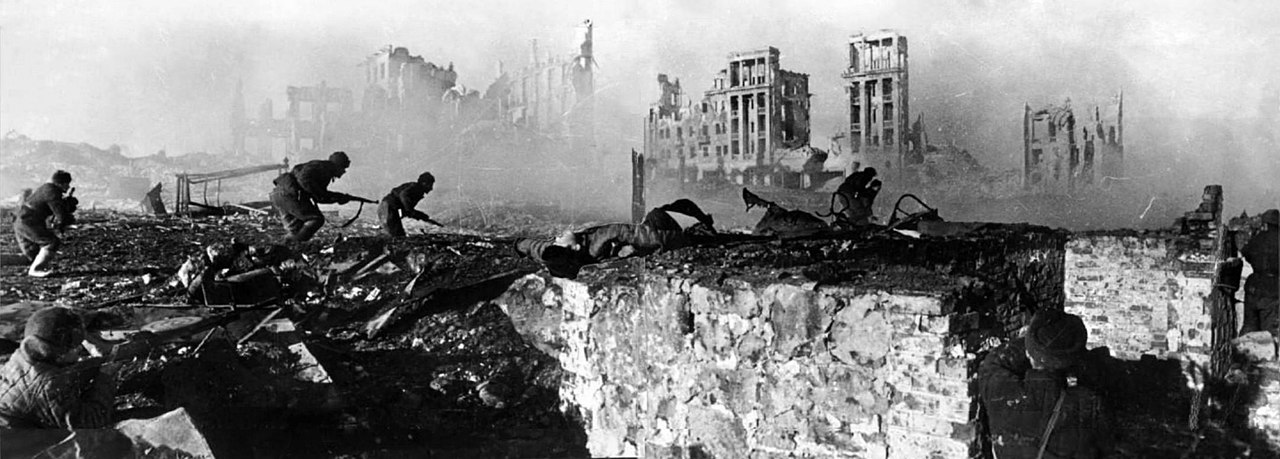
The temperature in Stalingrad on February 2, 1943 is minus 25 degrees Celsius. The city is rubble. The buildings that were a Soviet industrial center in the summer of 1942 are now gray shells, their interiors gutted by five months of fighting at distances measured in meters. The streets are littered with the frozen dead of both armies, left where they fell because neither side had the manpower to collect them.
Contents — 6 sections
- OPENING SCENE
- THE BATTLE OF MIDWAY
- EL ALAMEIN
- STALINGRAD
- KURSK: THE LAST GERMAN GAMBLE
- THE TIDE TURNS
OPENING SCENE

The temperature in Stalingrad on February 2, 1943 is minus 25 degrees Celsius. The city is rubble. The buildings that were a Soviet industrial center in the summer of 1942 are now gray shells, their interiors gutted by five months of fighting at distances measured in meters. The streets are littered with the frozen dead of both armies, left where they fell because neither side had the manpower to collect them.
In the basement of a ruined Univermag department store on Ploshchad Pavshikh Bortsov (the Square of Fallen Fighters), Field Marshal Friedrich Paulus and his staff have been sheltering for days. They have no food. They have no fuel for heating. They have been eating what could be scavenged from the ruins of a city that has itself been stripped of everything. Communications with Berlin have been intermittent. Hitler has promoted Paulus to the highest rank in the German military, sent with the implicit message that a Prussian officer of that rank does not let himself be taken alive.

Paulus does not take his own life. His chief of staff, General Arthur Schmidt, sends a last radio message to Army Group Don: the 6th Army has ceased fighting. Soviet officers receive the formal surrender in the department store basement. Paulus and his staff are led into captivity. Of the approximately 91,000 soldiers who surrender in the final days, approximately 5,000–6,000 will eventually return to Germany — some not until the mid-1950s. The rest will die of disease, starvation, and the brutal conditions of Soviet captivity.
The news reaches Berlin in the early morning of February 2. Hitler orders three days of national mourning. Radio stations play funeral music. For the first time since the war began, the German government is publicly acknowledging a catastrophic defeat. The psychological impact in Germany is enormous: this is a moment that every historian who interviewed German civilians about when they first believed Germany might lose the war points to as the turning point. Before Stalingrad, most Germans believed the Wehrmacht was invincible. After Stalingrad, they could no longer be certain.
LOCKED AFTER THE PREVIEW
What's in the rest of Day 4
- THE BATTLE OF MIDWAY
- EL ALAMEIN
- STALINGRAD
- KURSK: THE LAST GERMAN GAMBLE
- THE TIDE TURNS