BRAZIL - DAY 2 OF 6 · ~27 MIN
Sugar and the Slave Coast
Bahia, 1564. A Jesuit named José de Anchieta is writing a letter about the people of this coast.
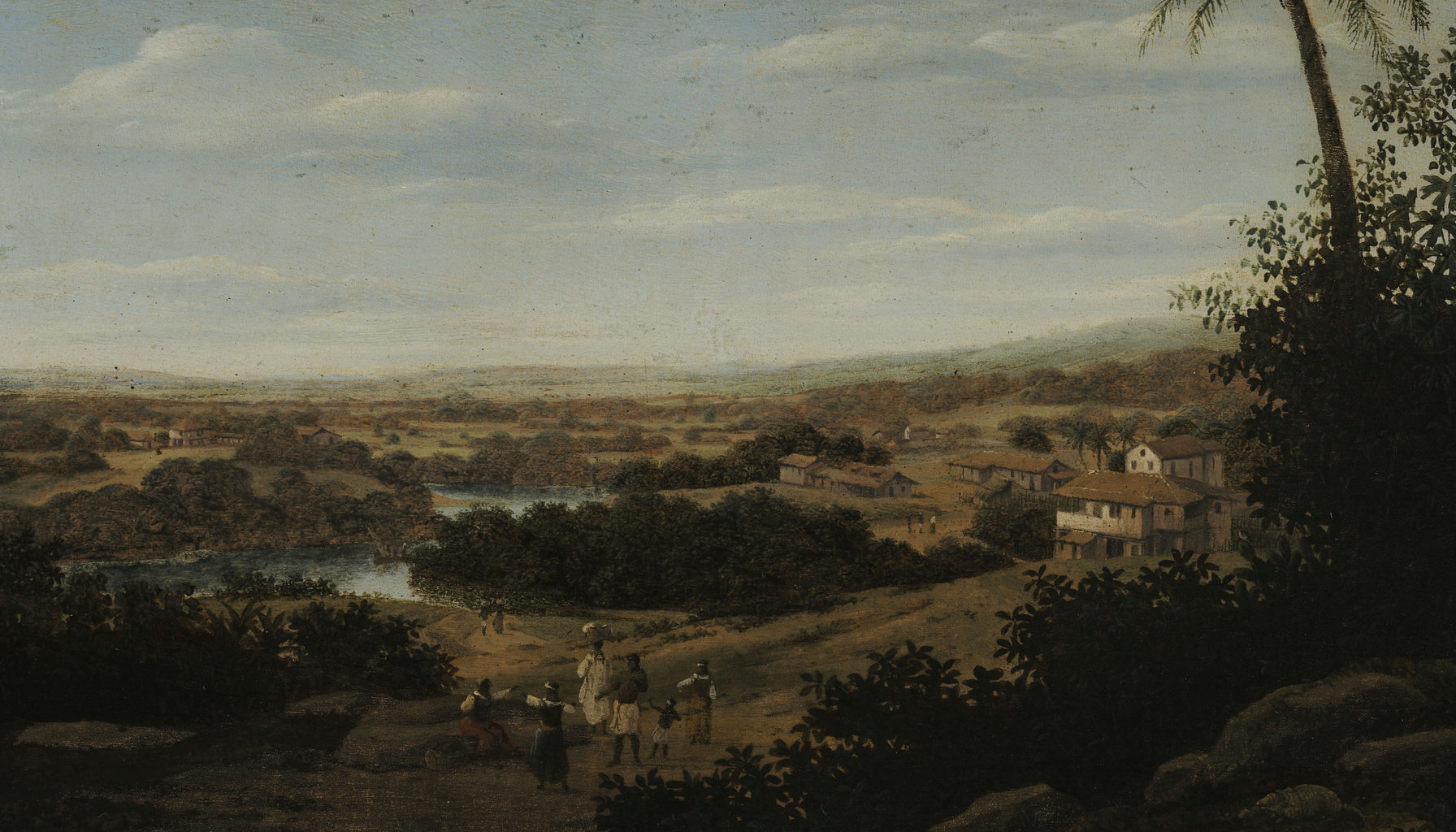
A sugar estate in the Pernambuco countryside, painted by Frans Post around 1660. The owner's big house and the mill buildings stand on the right, enslaved people walk the path in the foreground, and a palm leans in at the edge of the frame. Post came to Brazil in 1637 as the official painter of the Dutch colony and left in 1644. He painted this view in the Netherlands years afterwards, working from the drawings he had made on the spot. It shows the working unit the sugar colony was built from: the house, the mill, and the enslaved people who ran them, together in one calm frame. Frans Post / Wikimedia Commons / Public domain
Contents — 9 sections
- OPENING SCENE
- THE COAST IS CUT INTO STRIPS AND GIVEN AWAY
- A GOVERNOR, A CITY AND SIX JESUITS
- SUGAR BECOMES THE COLONY
- ONE WORKFORCE DIES, ANOTHER IS BOUGHT
- ONE KING, TWO EMPIRES, AND THE WALK INLAND
- THE DUTCH TAKE THE MACHINE
- THE MACHINE IS TAKEN BACK, AND COPIED
- THE NORTH, THE RIVER PLATE, AND THE END OF PALMARES
OPENING SCENE

Bahia, 1564. A Jesuit named José de Anchieta is writing a letter about the people of this coast.
Twenty years ago, the villages around the bay were full. Now, he writes, that population "is wasted in this Bahia, and it seems an incredible thing, for one never believed that so many people would ever be used up, let alone in such a short time".
Used up. He is describing human beings in the language of stock.

Smallpox had swept the coast in 1562, and measles the year after. Each disease killed about 30,000 people living under Portuguese control. Those are the estimates the Jesuits and royal officials made, and they are estimates rather than counts.
The sugar mills behind the coast lost most of their workers inside five years. The mills did not stop. Their output rose the whole time, because the men who owned them had begun buying enslaved people from Africa.
Today's Core Question: The mills lost most of their workforce inside five years and did not slow down. What does that tell you about what the colony was for?
LOCKED AFTER THE PREVIEW
What's in the rest of Day 2
- THE COAST IS CUT INTO STRIPS AND GIVEN AWAY
- A GOVERNOR, A CITY AND SIX JESUITS
- SUGAR BECOMES THE COLONY
- ONE WORKFORCE DIES, ANOTHER IS BOUGHT
- ONE KING, TWO EMPIRES, AND THE WALK INLAND
- THE DUTCH TAKE THE MACHINE
- THE MACHINE IS TAKEN BACK, AND COPIED
- THE NORTH, THE RIVER PLATE, AND THE END OF PALMARES