BRAZIL - DAY 4 OF 6 · ~36 MIN
The Throne in the Tropics
Salvador, 22 January 1808. A storm-worn fleet drops anchor in the Bay of All Saints, and the government of a European empire is on board.
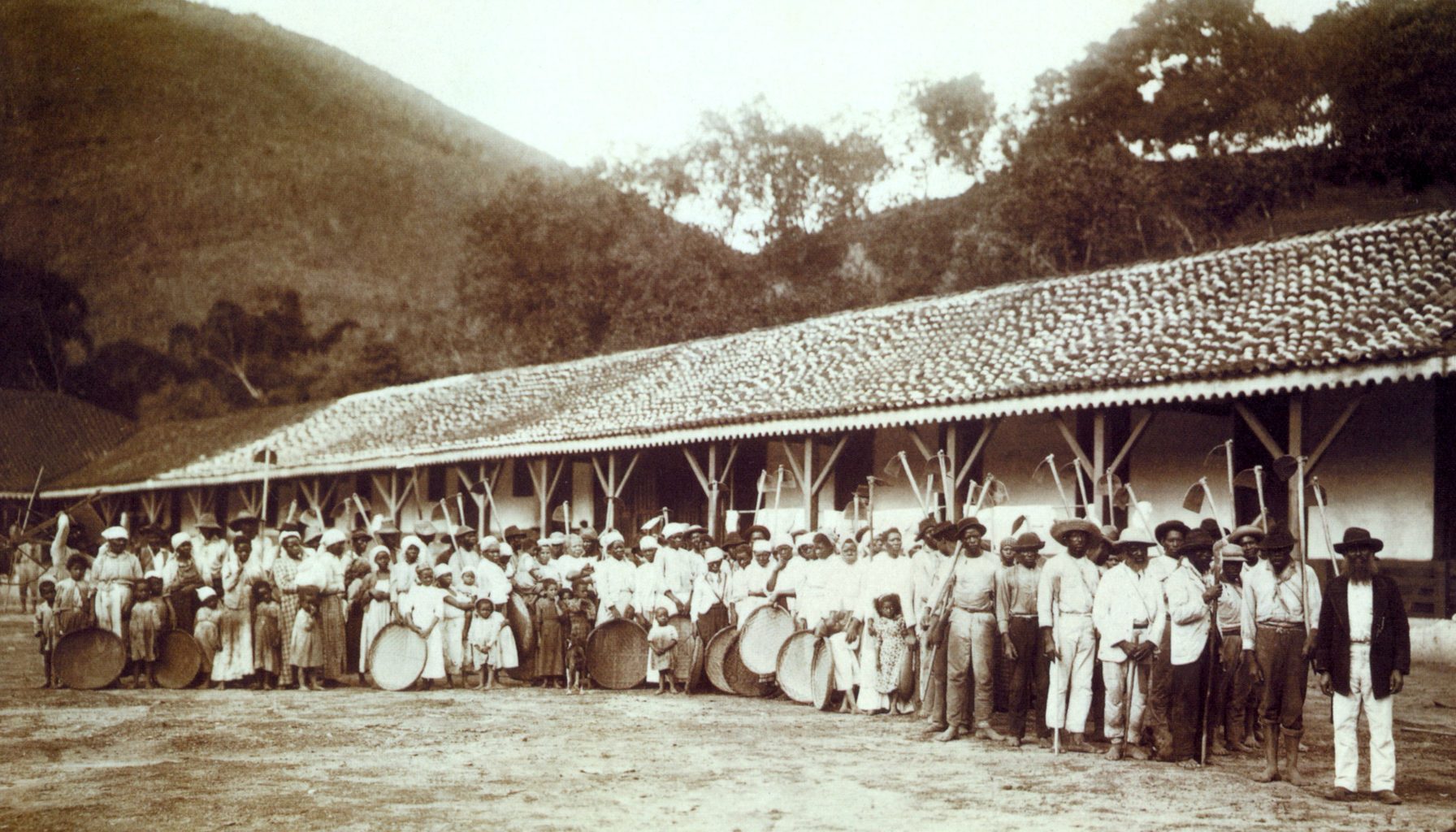
The workforce of a coffee estate about 1885, photographed by Marc Ferrez outside the senzala, the long tiled building where the estate's enslaved workers lived. They hold hoes and winnowing baskets, the tools of the harvest, and the hills of the coffee country rise behind them. By the decade of this photograph, decades of internal trade had concentrated Brazil's enslaved population in the coffee provinces of the south-east. Ferrez photographed Brazil for fifty years, and pictures like this one are among the last records of legal slavery made anywhere with a camera. The final national register of enslaved people, closed in March 1887, carried about 720,000 names. Marc Ferrez (1843-1923) / Wikimedia Commons / Public domain
Contents — 10 sections
- OPENING SCENE
- A COURT SAILS TO ITS OWN COLONY
- A COLONY BECOMES A KINGDOM, AND A PROVINCE REVOLTS
- INDEPENDENCE WITHOUT A REVOLUTION
- A CHARTER WITH A FOURTH BRANCH IN IT
- THE DECADE THE COUNTRY NEARLY CAME APART, AND THE CROP THAT PAID FOR IT
- A FORTNIGHT IN SEPTEMBER 1850
- A WAR, A CENSUS AND A DROUGHT
- SEVENTEEN YEARS OF POSTPONEMENT
- TWO SENTENCES, AND EIGHTEEN MONTHS
OPENING SCENE

Salvador, 22 January 1808. A storm-worn fleet drops anchor in the Bay of All Saints, and the government of a European empire is on board.
The prince regent João rules Portugal in the name of his mother, Queen Maria I. He has been at sea for eight weeks. Napoleon's army was closing on Lisbon when his ships cleared the river, with the Royal Navy as escort.
The fleet carries the royal family, the treasury, the state archives and the working officials of a government. The capital of Portugal is now wherever these ships are.
Six days later, on 28 January, João signs a one-page order called a Carta Régia, a royal letter. His adviser is José da Silva Lisboa, a Bahian economist. The order opens Brazil's ports to the ships of all friendly nations.

For two centuries the law had required Brazil's trade to pass through Portugal. That rule ends on this one page. It is signed in a colonial port by a ruler with nowhere else to go.
The eighty years that follow run from this signature to another one, also in Brazil, also one page long. In between, Brazil becomes a kingdom, then a country, and remains a slave society almost to the end.
Today's Core Question: Brazil became a country without a revolution. What did that continuity make impossible to change afterwards?
LOCKED AFTER THE PREVIEW
What's in the rest of Day 4
- A COURT SAILS TO ITS OWN COLONY
- A COLONY BECOMES A KINGDOM, AND A PROVINCE REVOLTS
- INDEPENDENCE WITHOUT A REVOLUTION
- A CHARTER WITH A FOURTH BRANCH IN IT
- THE DECADE THE COUNTRY NEARLY CAME APART, AND THE CROP THAT PAID FOR IT
- A FORTNIGHT IN SEPTEMBER 1850
- A WAR, A CENSUS AND A DROUGHT
- SEVENTEEN YEARS OF POSTPONEMENT
- TWO SENTENCES, AND EIGHTEEN MONTHS