SPAIN - DAY 3 OF 6 · ~32 MIN
The Silver Century
Madrigalejo, in Extremadura, 22 January 1516. A king is dying in a borrowed house.
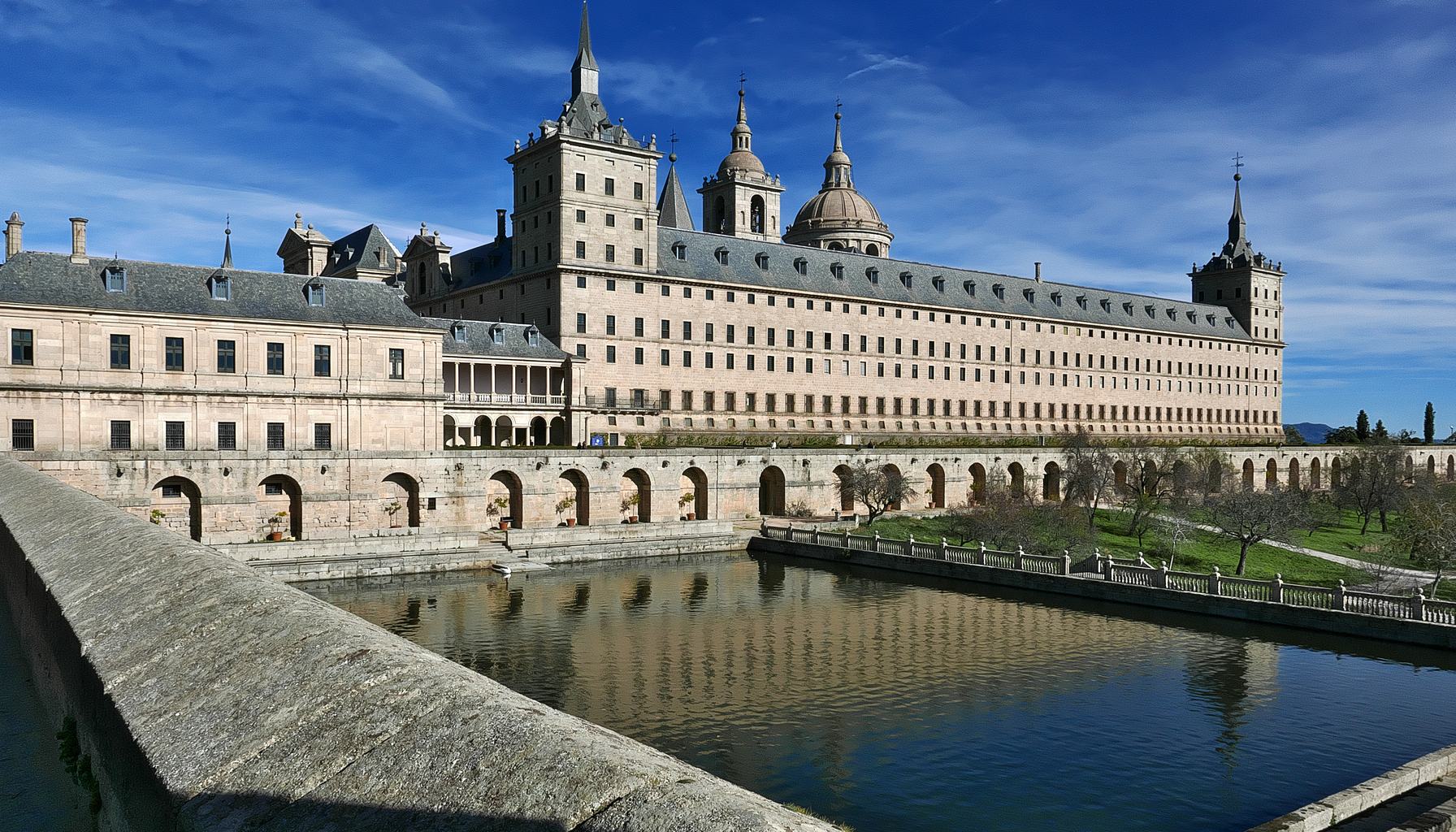
El Escorial seen from the south, across the water of its reservoir. The grey granite monastery and palace was begun in 1563 and finished in 1584. Philip II governed Peru, Milan, Flanders and Aragon from a desk inside it, entirely by letter. He never saw most of what he ruled, and a report from Brussels took weeks to reach his hand. Photograph: José Luis Filpo Cabana / Wikimedia Commons / CC BY 3.0
Contents — 9 sections
- OPENING SCENE
- A FIFTEEN-YEAR-OLD FROM FLANDERS INHERITS FOUR LEDGERS
- TWO EXPEDITIONS AND ONE VOYAGE
- THE MOUNTAIN THAT PAID FOR EVERYTHING
- THREE FRONTS AT ONCE
- A KINGDOM ADDED ON THE OLD TERMS
- THE BILL ARRIVES IN CASTILE, AND ARAGÓN FINDS OUT WHAT ITS CHARTERS ARE WORTH
- THE HOLLOWING OUT
- OLIVARES PRESENTS THE BILL
OPENING SCENE

Madrigalejo, in Extremadura, 22 January 1516. A king is dying in a borrowed house.
Ferdinand of Aragon is sixty-three. He has been ill for months. He is travelling south towards Guadalupe when he can go no further, and he stops in a small house belonging to a friar.
That day he signs his last will. He dies in the night, and the record carries the date 23 January 1516.
The will leaves Castile to his daughter Joanna, and the running of it to her son. That son is in Flanders. He is fifteen years old.
Charles of Ghent has never set foot in Spain. He speaks French and Flemish and not a word of Castilian. The news takes about three weeks to reach him.
On 14 March, in the church of Saint Gudula in Brussels, he has himself proclaimed king. Not king of Spain. There is no such title and no such crown.
He is proclaimed king of Castile and, separately, king of Aragon. Two crowns on one head, and his mother is still the legal queen of one of them.
Within four years he will also be Holy Roman Emperor, elected with borrowed money. Within five, the towns of Castile will be at war with him over who pays for it.
Yesterday's session ended with a marriage that joined two people and left two countries standing. Today a world empire lands on top of that arrangement, and it lands inside only one of its halves.
Today's Core Question: If an empire belongs in law to just one of a monarchy's kingdoms, what happens when the bill finally arrives?
LOCKED AFTER THE PREVIEW
What's in the rest of Day 3
- A FIFTEEN-YEAR-OLD FROM FLANDERS INHERITS FOUR LEDGERS
- TWO EXPEDITIONS AND ONE VOYAGE
- THE MOUNTAIN THAT PAID FOR EVERYTHING
- THREE FRONTS AT ONCE
- A KINGDOM ADDED ON THE OLD TERMS
- THE BILL ARRIVES IN CASTILE, AND ARAGÓN FINDS OUT WHAT ITS CHARTERS ARE WORTH
- THE HOLLOWING OUT
- OLIVARES PRESENTS THE BILL