SPAIN - DAY 4 OF 6 · ~27 MIN
A New Dynasty
Madrid, 16 January 1716. No siege, no smoke, no soldiers in the street. A king sits down and signs a piece of paper.
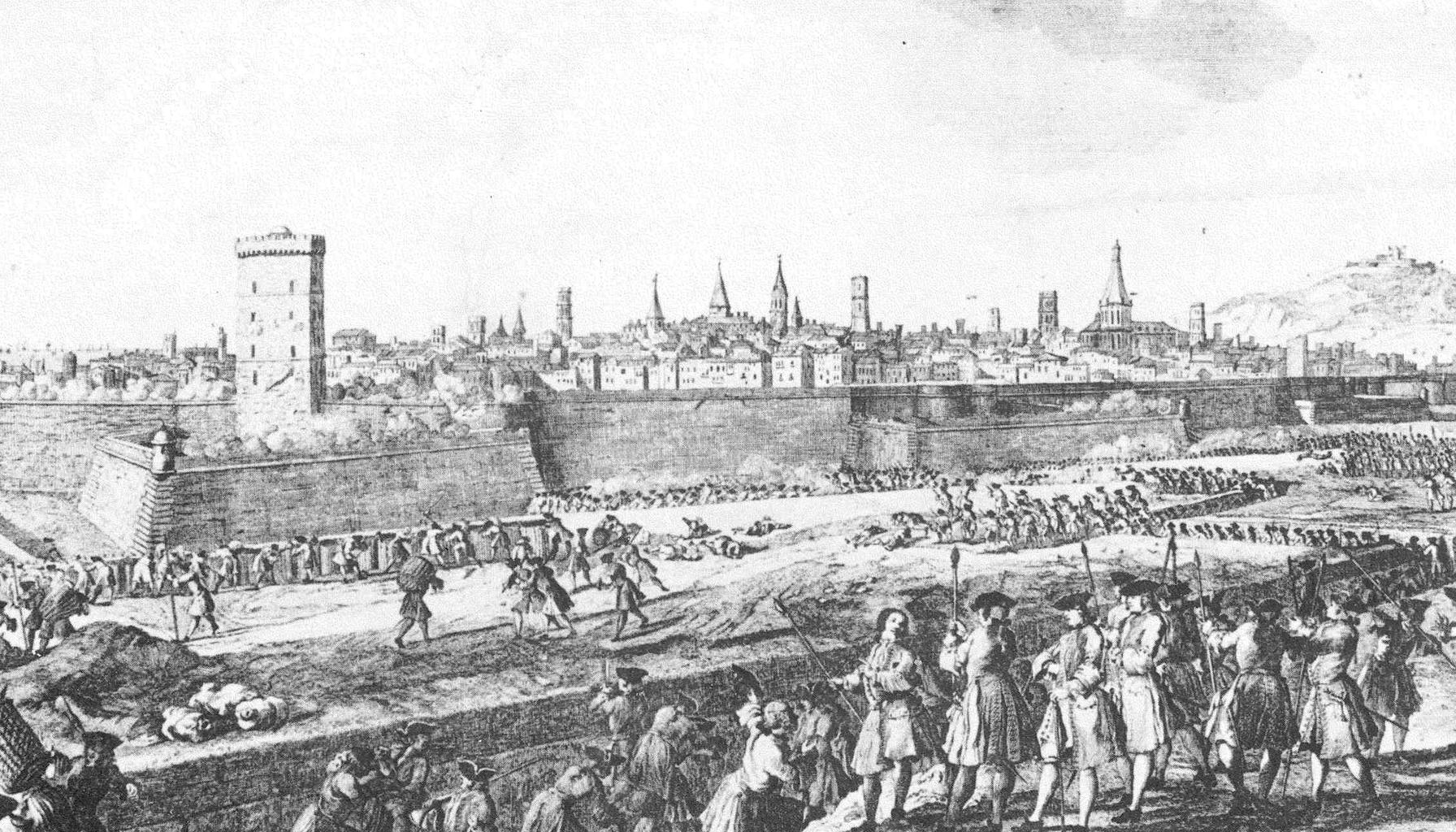
Barcelona in 1714, seen from the Bourbon siege lines. The city's walls and skyline rise behind the attackers' trenches. The engraver J. Rigaud published this plate that year to record the assault on the covered way, the outwork beside the ditch whose loss opened the ramparts. The siege it belongs to lasted thirteen months, and much of the defence inside those walls was carried by craft guilds under arms. J. Rigaud (1659-1743) / Wikimedia Commons / CC0
Contents — 9 sections
- OPENING SCENE
- A WAR ABOUT SPAIN, FOUGHT INSIDE SPAIN
- THIRTEEN MONTHS, AND THE DECREE THAT EXPLAINED ITSELF
- THE CENTURY THAT DOES NOT FIT THE STORY
- THE STATE DISAPPEARS AND AUTHORITY REASSEMBLES FROM BELOW
- THE CONSTITUTION CANCELLED, AND AN EMPIRE LOST
- THE MAP REDRAWN, THE CHURCH SOLD, THE CHARTERS TRADED
- A REVOLUTION, A REPUBLIC, AND A CONSTITUTION THAT OUTLASTED BOTH
- THREE MOVEMENTS, AND A WORD INVENTED FOR THE PAST
OPENING SCENE

Madrid, 16 January 1716. No siege, no smoke, no soldiers in the street. A king sits down and signs a piece of paper.
The paper abolishes a parliament. The Corts of Catalonia had voted taxes and made law for centuries. It will never meet again.
The Generalitat, the standing body that ran Catalonia between sessions, goes with it. So does the Consell de Cent, Barcelona's own city council.
The Council of Castile drafted the text. Philip V signed it. The original sits today in Barcelona, in the archive of the institution it dissolved.
The same king had already done this to Aragón and Valencia in 1707, and to Mallorca two months before. He did not do it to Navarre, or to the three Basque provinces.
Day 2 listed everything the 1469 wedding left standing: separate parliaments, separate laws, separate money, separate taxes. This is the day somebody goes through that list with a pen.
Not all of it, though. What the pen skipped shaped Spain as much as what it struck out.
Today's Core Question: Can a state make itself one country by abolishing the institutions that made it several?
LOCKED AFTER THE PREVIEW
What's in the rest of Day 4
- A WAR ABOUT SPAIN, FOUGHT INSIDE SPAIN
- THIRTEEN MONTHS, AND THE DECREE THAT EXPLAINED ITSELF
- THE CENTURY THAT DOES NOT FIT THE STORY
- THE STATE DISAPPEARS AND AUTHORITY REASSEMBLES FROM BELOW
- THE CONSTITUTION CANCELLED, AND AN EMPIRE LOST
- THE MAP REDRAWN, THE CHURCH SOLD, THE CHARTERS TRADED
- A REVOLUTION, A REPUBLIC, AND A CONSTITUTION THAT OUTLASTED BOTH
- THREE MOVEMENTS, AND A WORD INVENTED FOR THE PAST