SPAIN - DAY 6 OF 6 · ~34 MIN
Spain Today
Madrid, 22 November 1975. Franco's body is lying in state in the Royal Palace, a little over a mile away. He died two days ago.
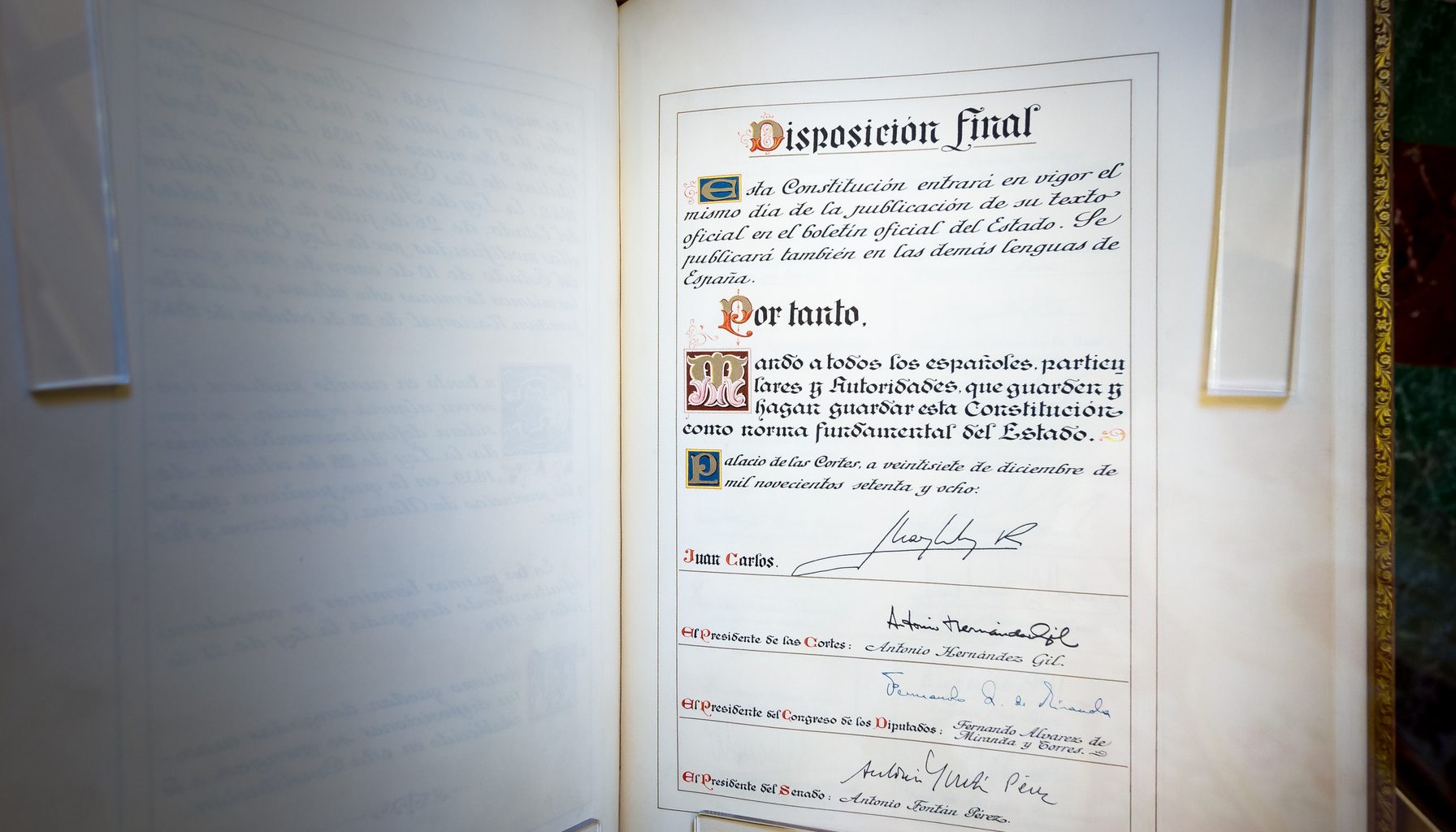
The original copy of the 1978 Constitution, displayed in the Congress of Deputies in Madrid, open at the final page signed on 27 December 1978 by the King and by the presidents of the Cortes, the Congress and the Senate. The text names no autonomous community and draws no internal map. It sets out only the procedures by which a territory could become one, and leaves the country to be assembled afterwards. Barcex / Wikimedia Commons / CC BY-SA 4.0
Contents — 10 sections
- OPENING SCENE
- THE SUCCESSOR THE SYSTEM CHOSE
- ONE SENTENCE, TWO MEANINGS
- COFFEE FOR EVERYONE, THEN TANKS IN THE CHAMBER
- EUROPE AS AN ANSWER
- A COUNTRY PEOPLE MOVE TO
- THE CRASH, AND THE COURT
- THE PARTY SYSTEM BREAKS, AND CATALONIA VOTES
- A PARLIAMENT OF SIX PARTIES, AND A COUNTRY TESTED
- WHAT IS STILL OPEN IN 2026
OPENING SCENE

Madrid, 22 November 1975. Franco's body is lying in state in the Royal Palace, a little over a mile away. He died two days ago.
Inside the chamber of the Cortes, a man of thirty-seven is being proclaimed king of Spain. His name is Juan Carlos de Borbón.
The parliament proclaiming him is Franco's own. The law it is using is Franco's own Law of Succession, passed in 1947. Six years earlier, in that same room, Juan Carlos had sworn loyalty to Franco and to the principles of his movement.
So the new head of state arrives carrying the old state's signature. Nothing about him is a break. Every legal thread runs backwards.
That matters more than anything he personally does next. The change that followed was negotiated rather than won. Nobody in it could be named the loser, and a country that cannot name a loser has to write agreements both sides can read their own way.
Franco's prime minister, Carlos Arias Navarro, stays in office. For eight months, very little happens.
Today's Core Question: What happens to a country whose founding agreement is a deliberate agreement not to decide?
LOCKED AFTER THE PREVIEW
What's in the rest of Day 6
- THE SUCCESSOR THE SYSTEM CHOSE
- ONE SENTENCE, TWO MEANINGS
- COFFEE FOR EVERYONE, THEN TANKS IN THE CHAMBER
- EUROPE AS AN ANSWER
- A COUNTRY PEOPLE MOVE TO
- THE CRASH, AND THE COURT
- THE PARTY SYSTEM BREAKS, AND CATALONIA VOTES
- A PARLIAMENT OF SIX PARTIES, AND A COUNTRY TESTED
- WHAT IS STILL OPEN IN 2026