SPAIN - DAY 5 OF 6 · ~36 MIN
The Broken Century
Barcelona, 19 May 1960. The Palau de la Música Catalana is full for a concert marking a hundred years since the birth of Joan Maragall, a Catalan poet who died in 1911. Ministers of Franco's government are in the audience.
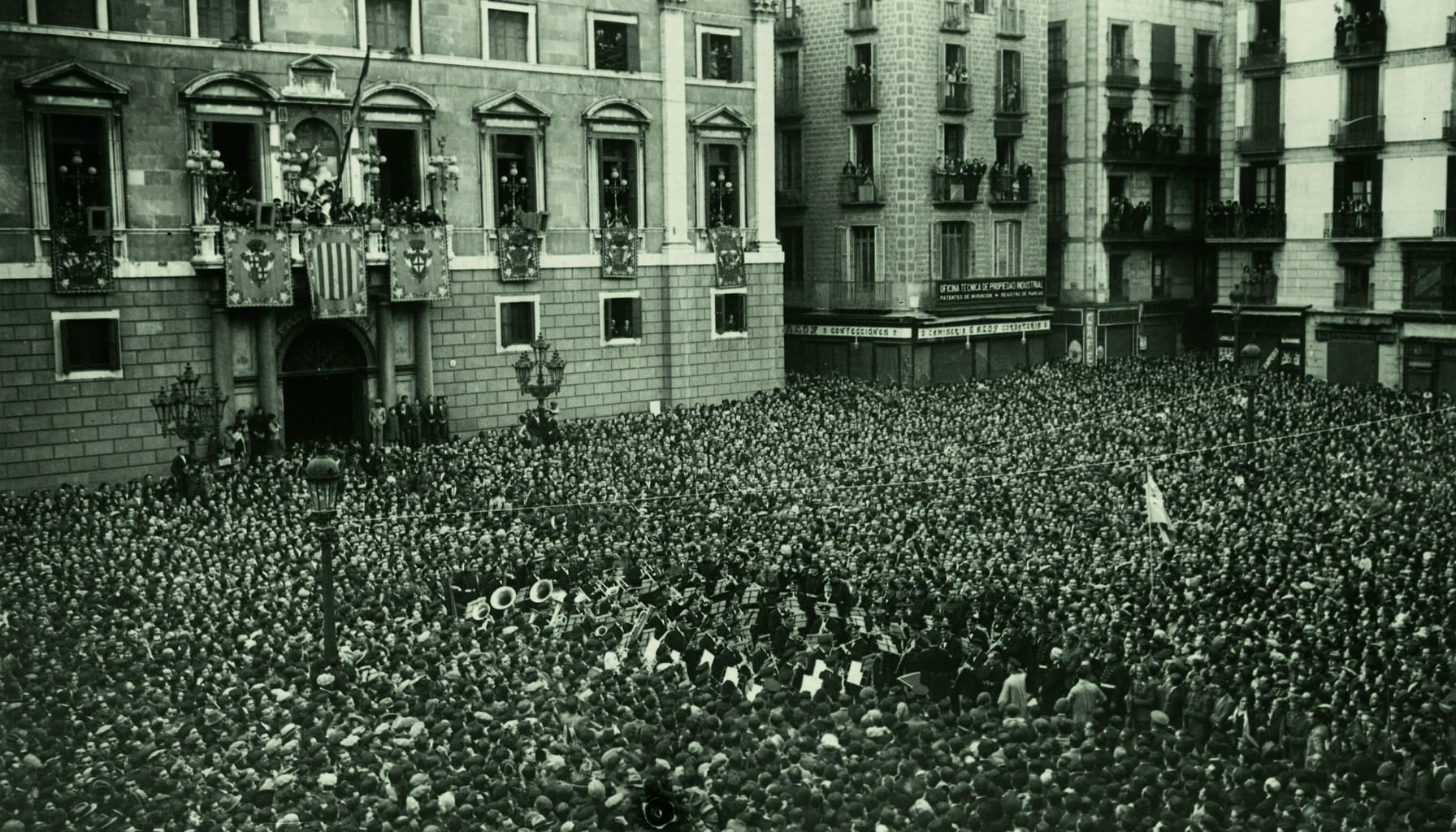
Plaça de Sant Jaume in Barcelona on 14 April 1931, the day the Second Republic was proclaimed. The square is full to the walls, the municipal band is playing in the middle of the crowd, and the balcony of the Palau de la Generalitat on the left is hung with Catalan arms. That building has been the seat of Catalonia's government since the fifteenth century, which is part of why a proclamation made from that particular balcony carried weight the new republic had to answer. Josep Maria Sagarra / Wikimedia Commons / Public domain
Contents — 10 sections
- OPENING SCENE
- THE DISASTER, AND WHAT IT PRODUCED
- A WAR IN MOROCCO, AND A SYSTEM THAT COULD NOT CARRY IT
- A REPUBLIC THAT WOULD NOT SAY WHAT SPAIN WAS
- THE SUMMER OF 1936
- THE KILLING BEHIND BOTH LINES
- A STATUTE, A GOLD RESERVE, AND GERNIKA
- THE REPUBLIC TURNS ON ITSELF, AND LOSES
- A SINGLE-PARTY STATE, AND THE YEARS IT SPENT ALONE
- THE ECONOMY OPENS, THE HEIR IS NAMED, AND THE MAN DIES
OPENING SCENE

Barcelona, 19 May 1960. The Palau de la Música Catalana is full for a concert marking a hundred years since the birth of Joan Maragall, a Catalan poet who died in 1911. Ministers of Franco's government are in the audience.
This evening sits sixty-two years into the story this day tells. The story starts in 1898, and it only catches up to this room at the very end.
One item has been struck from the printed programme. Barcelona's civil governor, Felipe Acedo Colunga, has ordered that the hall will not hear El cant de la senyera. It is the hymn of the Orfeó Català, the choir the building was raised for. It is also what Catalans sang when Els Segadors, the Catalan anthem, was not allowed.
Partway through the evening a group of young people stand up and sing it anyway. Leaflets go round the hall. They are headed Us presentem el General Franco, we present General Franco to you.
The man who wrote them is not in the building. Jordi Pujol is a doctor of twenty-nine. At two in the morning he is warned to go into hiding, and his wife, Marta Ferrusola, persuades him not to run.
He is court-martialled, sentenced to seven years, and serves about three. Twenty years later he led the restored Catalan government.
Historians of Catalanism call that night the Fets del Palau, the events at the Palau, and treat it as the restart of political Catalanism after the war. A hymn had been taken off a programme by order of the state. The hall sang it in front of the state's own ministers.
Twenty-one years earlier that identity had lost a war. It had lost its parliament, and it had been taken out of schools, courts and print. It was still there, and it was singing.
What follows is seventy-seven years in which Spain tried every available answer to the same question: reform, a general, a republic, a war, and thirty-six years of enforcement.
Today's Core Question: What happens to a national question when a country stops asking it and starts policing it?
LOCKED AFTER THE PREVIEW
What's in the rest of Day 5
- THE DISASTER, AND WHAT IT PRODUCED
- A WAR IN MOROCCO, AND A SYSTEM THAT COULD NOT CARRY IT
- A REPUBLIC THAT WOULD NOT SAY WHAT SPAIN WAS
- THE SUMMER OF 1936
- THE KILLING BEHIND BOTH LINES
- A STATUTE, A GOLD RESERVE, AND GERNIKA
- THE REPUBLIC TURNS ON ITSELF, AND LOSES
- A SINGLE-PARTY STATE, AND THE YEARS IT SPENT ALONE
- THE ECONOMY OPENS, THE HEIR IS NAMED, AND THE MAN DIES